Auto Transport Bill of Lading: What It Is and How It Works
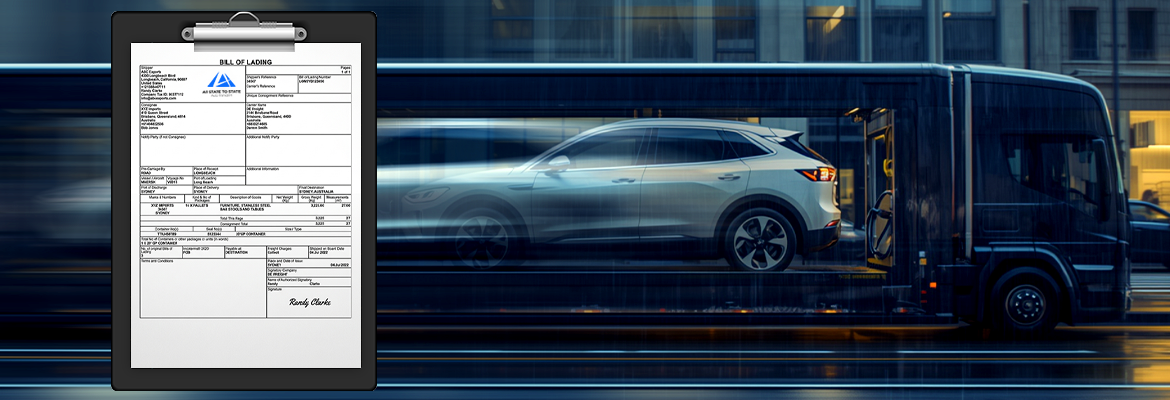
When you ship a car, the driver typically inspects the vehicle at pickup and delivery and records its condition on a document called the bill of lading (BOL). This document is an important part of the auto transport process because it records vehicle details, shipment information, and visible damage noted during inspection.
An auto transport bill of lading also provides a reference if you discover damage after delivery. Comparing the pickup and delivery condition reports can help establish whether a particular issue was documented before transportation or appeared during the shipment.
The bill of lading is one part of the broader vehicle transportation process. Understanding how to ship a car can help you prepare for carrier assignment, vehicle pickup, transportation, and final delivery.
What Is an Auto Transport Bill of Lading?
An auto transport bill of lading is a shipping document used to record information about a vehicle being transported by a motor carrier. It commonly serves as a receipt for the vehicle and a record of its condition at pickup and delivery.
In vehicle shipping, the BOL is often combined with a vehicle inspection or condition report. Some carriers use one document for both purposes, while others maintain separate paperwork.
The document helps the carrier and vehicle owner establish the vehicle's condition when transportation begins and when the vehicle is delivered. It may also include the carrier's information, vehicle identification, pickup and delivery details, and signatures.
BOL is the abbreviation for Bill of Lading. You may also see documents described as an auto transport BOL, vehicle bill of lading, car shipping inspection report, or vehicle condition report.
What Information Does a Car Shipping Bill of Lading Include?
The exact format of a bill of lading for auto transport varies by carrier. However, most vehicle shipping forms contain several common fields.
-
Carrier information: The motor carrier's business name and relevant contact or operating details.
-
Shipment information: The order or reference number, pickup location, delivery destination, and applicable dates.
-
Vehicle details: Make, model, year, color, VIN, and license plate information.
-
Mileage and fuel level: These may be recorded during the pickup and delivery inspections.
-
Vehicle condition: A diagram or written description showing visible scratches, dents, chips, cracks, and other existing damage.
-
Inspection notes: Additional details about the vehicle's condition or any discrepancies.
-
Signatures: Acknowledgment from the driver and the person releasing or receiving the vehicle.
Review the information before signing. If the VIN, vehicle details, or inspection notes are incorrect, ask the driver to correct them.
What Does an Auto Transport Bill of Lading Look Like?
A typical auto transport bill of lading form includes shipment details, vehicle identification fields, a vehicle diagram, inspection notes, and signature sections.
The vehicle diagram is particularly important. It gives the driver and customer a way to mark the location of existing scratches, dents, paint damage, cracked glass, or other visible defects.
A basic auto transport BOL sample may be organized like this:
Vehicle and shipment information
-
Carrier name:
-
Order number:
-
Vehicle year, make, and model:
-
VIN:
-
License plate:
-
Pickup location:
-
Delivery location:
Pickup inspection
-
Pickup date:
-
Odometer reading:
-
Existing damage:
-
Additional notes:
-
Driver signature:
-
Customer or authorized representative signature:
Delivery inspection
-
Delivery date:
-
Odometer reading:
-
New damage or discrepancies:
-
Additional notes:
-
Driver signature:
-
Customer or authorized representative signature:
This is an illustrative layout, not an official carrier document or a substitute for the completed bill of lading used for your shipment. Actual forms may include vehicle diagrams, damage codes, payment details, and additional terms.
How Does the Auto Transport Bill of Lading Inspection Work?
The vehicle inspection generally takes place twice: when the carrier collects the vehicle and when it delivers it.
Vehicle Inspection at Pickup
Before loading the vehicle, the driver and the person releasing it should inspect its visible condition. Existing damage is recorded on the BOL or accompanying vehicle condition report.
The inspection may identify:
-
Scratches and paint damage.
-
Dents and body panel damage.
-
Cracked glass or damaged lights.
-
Missing exterior parts or accessories.
-
Other visible defects.
Walk around the vehicle with the driver and check that the inspection diagram accurately reflects its condition. If you notice damage that has not been recorded, point it out and request an update.
Take photographs from several angles before the vehicle leaves. Keep a copy or clear photograph of the completed pickup inspection document.
Before the carrier arrives, it is also helpful to prepare your vehicle for inspection and transportation. Follow these steps to prepare your car for shipping to make the pickup process easier.
Documenting Existing Vehicle Damage
The pickup inspection establishes a record of visible damage that existed before transportation. This distinction becomes important if you later need to report a problem.
Do not assume that a small scratch or dent is too minor to document. Ask the driver to record all visible damage accurately, including marks on bumpers, doors, mirrors, wheels, and other accessible areas.
If the inspection notes do not accurately describe the vehicle's condition, request corrections before signing.
Vehicle Inspection at Delivery
When the carrier delivers your vehicle, inspect it before signing the final bill of lading or delivery condition report.
Compare its current condition with the pickup inspection document and your photographs. Check the exterior carefully, including areas that may be difficult to notice at first glance.
If you find new damage, ask the driver to record it on the delivery report. Take photographs and retain a copy of the completed document.
Do not sign a report stating that the vehicle arrived without damage if you have identified new damage that has not been recorded.
What Should You Check Before Signing a Bill of Lading?
Your signature acknowledges the information recorded on the document. Before signing, take time to check the following:
-
Vehicle identification: Confirm that the make, model, year, and VIN match your vehicle.
-
Existing damage: Check that scratches, dents, chips, and other visible defects are recorded accurately.
-
Pickup or delivery details: Review the relevant location and inspection information.
-
Mileage and other recorded details: Check that any documented readings or vehicle information are accurate.
-
Additional notes: Make sure special conditions or discrepancies are included where relevant.
-
Signatures and copies: Confirm that the required parties have signed and that you retain a copy.
At delivery, pay particular attention to new damage. If the vehicle's condition differs from the pickup report, have the discrepancy documented before signing.
How to Fill Out an Auto Transport Bill of Lading
The driver or carrier representative generally completes the transportation and inspection information with the customer or an authorized representative. The process may be completed on paper or electronically.
If you are reviewing or helping complete a bill of lading, follow these steps:
-
Enter the vehicle details: Confirm the year, make, model, VIN, and other identifying information.
-
Review shipment information: Check the carrier, pickup location, delivery destination, and relevant dates.
-
Inspect the vehicle: Walk around the car and identify visible damage before loading.
-
Record existing damage: Make sure all visible defects are marked on the diagram or described in the notes.
-
Review the completed form: Check the entries for accuracy before signing.
-
Keep a copy: Save the completed pickup document for comparison at delivery.
-
Complete the delivery inspection: Compare the vehicle's condition with the original report and document any new damage.
Never sign a blank form or accept inspection notes that do not accurately describe the vehicle.
Can You Get a Free Auto Transport Bill of Lading Template?
You may find free bill of lading templates online in PDF, Word, or Excel formats. However, a generic bill of lading form may not match the documentation requirements or inspection process of the motor carrier transporting your vehicle.
A general freight BOL template, for example, may not include the vehicle diagrams and condition-report fields needed for auto transport.
If you need a blank auto transport bill of lading, ask the transportation company or assigned carrier for the form it actually uses. A carrier-provided document is preferable to an unrelated generic template.
Before using a printable or fillable auto transport BOL form, check that it includes:
-
Carrier and shipment information.
-
Vehicle details and VIN.
-
Pickup and delivery information.
-
Separate pickup and delivery inspection sections.
-
A vehicle diagram or space for damage descriptions.
-
Additional notes and signature fields.
A blank or downloadable template is useful for understanding the document's layout, but it is not a completed shipping record. The carrier's actual bill of lading should document the vehicle and shipment being handled.
What Happens If You Find Damage at Delivery?
If your vehicle has new damage after transportation, the delivery inspection report becomes an important part of documenting the issue.
Take these steps:
-
Compare the damage with the pickup inspection report.
-
Photograph the affected areas from different angles.
-
Ask the driver to record the new damage on the delivery BOL before you sign.
-
Retain a copy of the completed delivery document.
-
Notify the carrier promptly and ask about its claims procedure.
-
Contact your shipping coordinator if a broker arranged the shipment.
The bill of lading helps document the vehicle's condition, but it does not automatically establish insurance coverage or guarantee that a claim will be approved. The applicable cargo insurance policy and claims requirements determine how a damage claim is handled.
For a better understanding of the protection available during vehicle transportation, read our guide to car shipping insurance and coverage.
Frequently Asked Questions About Auto Transport Bills of Lading
Is a bill of lading required for auto transport?
A bill of lading or similar transportation documentation is commonly used to record a vehicle shipment. The specific documents and requirements can vary by carrier and transportation arrangement. Ask the assigned carrier what paperwork you will receive at pickup and delivery.
Is the bill of lading proof of vehicle condition?
It is an important record of the vehicle's documented condition at the time of inspection. The pickup and delivery reports can help establish whether damage was present before transportation or appeared afterward. Photographs and other supporting records can provide additional evidence.
Should I sign a bill of lading if my car is damaged?
Do not sign a document that inaccurately describes the vehicle as damage-free. Ask the driver to record any new damage on the delivery inspection report before signing. Retain a copy and follow the carrier's claims procedure.
Can I get a copy of the auto transport bill of lading?
Ask the assigned carrier for a copy of the completed pickup and delivery documents. Keep both records because they provide a reference for the vehicle's condition before and after transportation.
What does BOL stand for in auto transport?
BOL stands for Bill of Lading. In auto transport, it is a shipping document that commonly records vehicle information, shipment details, and the vehicle's condition during pickup and delivery.
Arrange Your Vehicle Shipping with All State-to-State Auto Transport
The bill of lading is an important part of documenting your vehicle's condition during auto transport. Reviewing the pickup and delivery inspection reports, recording existing damage, and keeping copies of the completed documents can help you maintain a clear record throughout the shipment.
All State to State Auto Transport has provided nationwide vehicle shipping services since 2008. The company works with assigned motor carriers to coordinate door-to-door vehicle transportation across the United States.
Request a free vehicle shipping quote and ask about the documentation provided by the assigned carrier for your shipment.
Call 1-(800)-550-1515 to discuss your vehicle transportation needs.